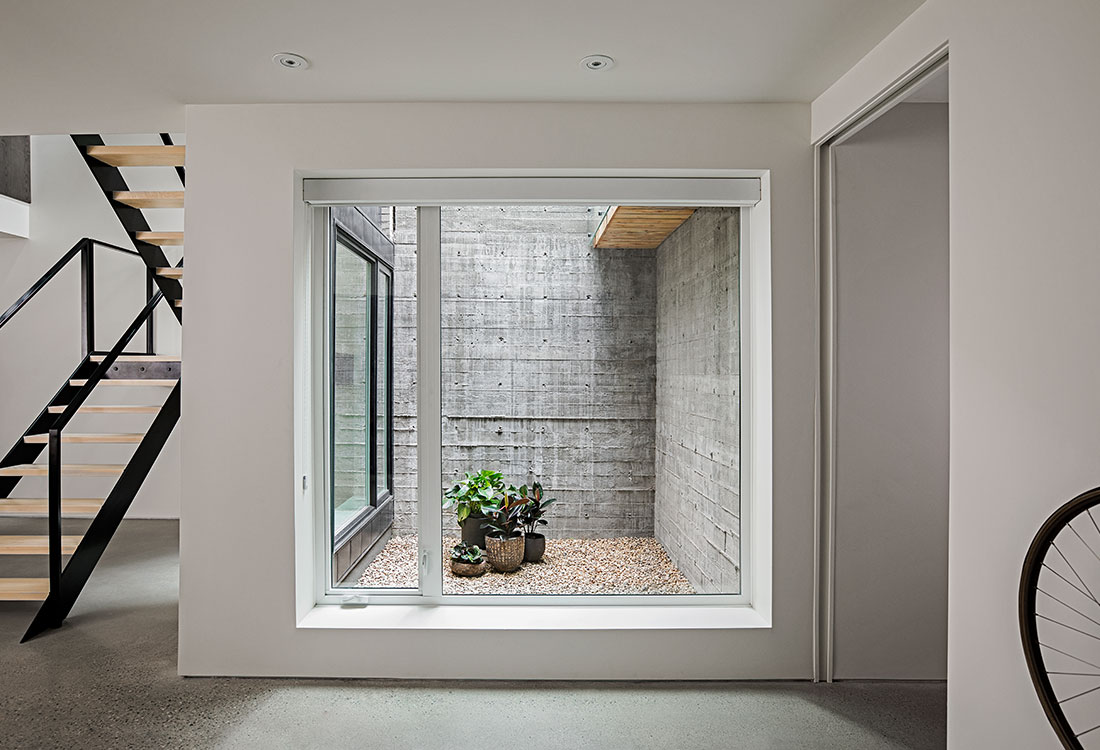
On a custom home project, the question of whether to hire an interior designer alongside an architect comes up often, and the honest answer depends on what your architect includes in their service and what you are actually trying to achieve. The boundary between architecture and interior design is real but blurrier than most people expect. This post explains what interior designers do, where their work overlaps with and diverges from architecture, and when a project genuinely benefits from having both disciplines at the table.
What architecture covers
An architect is responsible for the building: its form, its structure, the organisation of space, the relationship between interior and exterior, the envelope performance, and the technical documentation required to build and permit it. On a custom home, architectural scope typically includes spatial layout, ceiling heights, window and door placement, material selection for floors, walls, and ceilings, stair design, and built-in millwork design. The architect coordinates with structural, mechanical, and electrical engineers and produces the drawings that govern how the building is constructed.
Interior architecture, which is distinct from interior decorating and is often part of architectural scope, covers the design of fixed interior elements: the kitchen layout and cabinetry design, bathroom layout and fixture placement, built-in joinery and storage, and the material palette applied to all surfaces. These elements are resolved during the design development phase of the project, before construction documents are produced, because the structural and mechanical systems of the building must coordinate with them.
What interior design covers
Interior design, as a distinct profession, covers a broader scope than the fixed elements that architects typically address. A dedicated interior designer may work on space planning and layout, but their primary domain is the selection and specification of furniture, fixtures, and equipment (commonly referred to as FF&E), textiles, lighting, decorative elements, and the coordination of the moveable and decorative layer of a project. They bring sourcing relationships, product knowledge, and a detailed focus on how a space feels to live in beyond what the architecture alone delivers.
Registered Interior Designers in Canada, particularly those registered with the Interior Designers of Canada or provincial bodies like IDAlberta or IDIBC, are trained professionals whose work can include space planning, accessibility consultation, and project management of the fit-out phase. They are not the same as interior decorators, who focus on aesthetics without the technical and professional credentials of a registered designer.
Where the two disciplines overlap
The overlap between architecture and interior design is most pronounced in the design of kitchens, bathrooms, and custom millwork. An architect designing a kitchen is making decisions about layout, cabinetry proportion, material selection, and the integration of appliances and mechanical systems. An interior designer working on the same kitchen is making decisions about hardware, finishes, countertop material, and how the kitchen reads as a composed environment. These decisions are deeply interrelated and need to be made in coordination, not in sequence.
When an architect and interior designer work on the same project without clear coordination, the result is often conflict at the detail level: the architect's door swing interferes with the interior designer's furniture layout, the specified stone countertop does not work with the cabinetry finish the designer selected, or the lighting layout the architect drew for the electrical permit does not match the ambient lighting scheme the designer intended. Preventing this requires deliberate coordination from the beginning of the project, not a handoff at the end of construction documents.
When you need both
A project benefits from having both an architect and a dedicated interior designer when: the project is large enough that the FF&E procurement is a substantial undertaking in its own right, when the client has strong specific preferences for furnishings and textiles that they want professional help realising, when the project includes hospitality or commercial spaces where the designed environment is central to the business proposition, or when the architect's scope explicitly excludes FF&E specification and the client wants that layer of service.
For a typical custom home, whether you need a dedicated interior designer depends largely on what your architect includes in their scope. Some architects design and specify everything from the building envelope to the kitchen hardware and deliver a fully resolved interior. Others focus on architecture and building design and step back once construction documents are complete, leaving the interior fit-out to the client or a separate designer.
The question is not architect or interior designer. It is what your architect includes, and what remains to be resolved after they are done.
What full-service architectural practice includes
At Anonymous Architecture, interior design and FF&E specification are part of how we approach a full-service project. We do not consider architectural service complete when the building envelope is resolved. A custom home is a total environment, and the decisions about kitchen cabinetry, bathroom tile, hardware, built-in joinery, and material transitions throughout the interior are architectural decisions, not decorative ones. They are made during design development, before construction begins, and they are integrated with the structural and mechanical systems of the building from the start.
This is not universal. Many excellent architecture firms deliver permit drawings and leave the interior to others. Neither approach is wrong. What matters is that the client understands what their architect's scope includes, and makes a deliberate decision about what remains to be resolved and by whom. If your architect's scope ends at construction documents, and you care about the detail and resolution of the interior environment, engaging a qualified interior designer early, before construction begins, is worth the investment.
How to structure the relationship
If you are working with both an architect and an interior designer on the same project, the most important thing is to establish who is responsible for which decisions and who has authority when those decisions conflict. On a well-run project, the architect leads on anything that affects the structure, envelope, or mechanical systems of the building. The interior designer leads on furniture, textiles, and moveable elements. Fixed interior finishes and millwork are a shared zone that requires explicit coordination rather than assumed division.
Starting this coordination at the schematic design phase, rather than introducing the interior designer after construction documents are complete, produces significantly better outcomes. The earlier the interior design intent is understood, the more completely the architectural drawings can accommodate it.