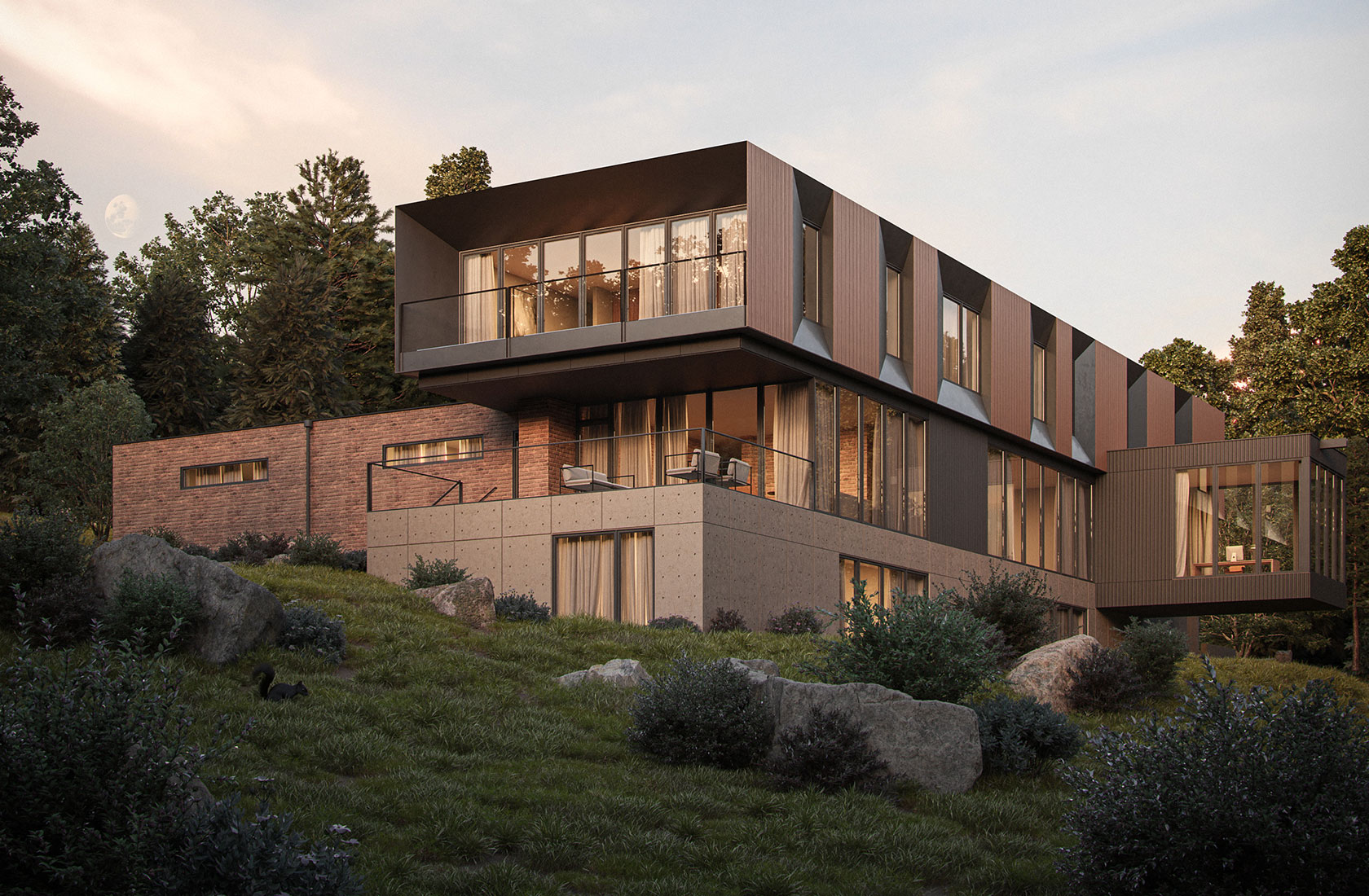
This is one of the most common questions people ask before starting a building project in Alberta. It is also one the industry tends to answer with more agenda than honesty. Architects will tell you that you always need one. Designers will tell you they can do everything an architect does for less. The truth sits somewhere more useful than either of those positions.
The legal distinction in Alberta
In Alberta, the title "architect" is legally protected under the Architects Act. Only professionals registered with the Alberta Association of Architects (AAA) may call themselves architects or offer architectural services. Registered architects carry professional liability insurance and are accountable to a regulatory body. Home designers, drafting services, and building designers operate outside this framework. They can legally prepare drawings for certain projects, but they cannot stamp and seal drawings as an architect, and they do not carry the same accountability.
When is a registered architect legally required?
Under Alberta's Architects Act, a registered architect must prepare and seal drawings for any building that falls outside the residential exemption. In practical terms, a registered architect is generally required for: multi-family residential buildings above a certain size, commercial and institutional buildings, mixed-use developments, and any project where the municipality requires architectural stamps as part of permit submission.
Single-family homes and duplexes fall under the residential exemption. An architect is not legally required for a new single-family home in Calgary or Edmonton. A qualified designer can prepare permit drawings without architectural involvement.
So do you need an architect for a custom home in Alberta?
Not legally. But that is the wrong question to stop at.
The residential exemption exists because a standard production home on a standard lot with standard finishes does not need an architect. A volume builder running the same floorplan across dozens of lots is doing construction management, and a drafting service handles that adequately. A custom home is a different brief. It involves a specific site with its own constraints, a client with specific spatial and lifestyle requirements, and a level of design intention that a standard plan cannot serve. These are exactly the conditions where architectural thinking adds value that is genuinely difficult to replicate.
We believe architecture is a pursuit of well-being for the people who will inhabit a building. Everyone else at the table — the builder, the developer, the real estate agent — has a different agenda. The architect's job is to advocate for the people who will actually live in the space: for the right light at the right time of day, for a bedroom that fosters sleep through refuge but connects to energy in the morning, for a home that can answer the demands of a growing family today and care for empty nesters a decade later. That is not what a drafted plan delivers. It is what design delivers.
The residential exemption means you can build without an architect. It does not mean building without one is the right decision for every project.
What a registered architect typically provides that a designer does not
The most honest answer is not about credentials. It is about the nature of the work. A registered architect brings professional liability, regulatory accountability, and a trained ability to solve problems at every scale simultaneously — from how the building sits on the lot to how a detail at the window sill manages water. Architectural training exists to navigate the tension between a site's constraints, a client's wishes, a builder's practicalities, and a regulator's requirements. That is a different skill set from preparing drawings to code minimum.
On constrained sites — sloped, flood-fringe, corner lots, heritage-adjacent, difficult neighbours — the problems that arise are exactly the problems architectural training exists to solve. On straightforward projects, a qualified designer may genuinely serve you well. On anything complex, the gap tends to show.
The honest answer for most Alberta homeowners
If you are building on a standard rectangular lot in an established neighbourhood and want a clean, well-built home without unusual design ambitions, a qualified residential designer can serve you adequately and at lower cost than a registered architecture firm.
If your site has constraints, if you want a home that is genuinely designed around how you live rather than adapted from a plan, or if the project is complex enough that errors in coordination would cost more than the design fee saved — hire a registered architect. The difference between a designed home and a drawn home is real, and it compounds over the decades you live in it.
What about BC?
British Columbia's framework is similar but not identical. The Architects Act RSBC governs architectural practice in BC, and the AIBC is the regulatory body. The residential exemption applies in BC as well, though the specific thresholds differ from Alberta. In Vancouver particularly, the City's own development permit guidelines may effectively require an architect even when the provincial Act does not — especially for complex sites, heritage properties, or projects triggering a design review panel.