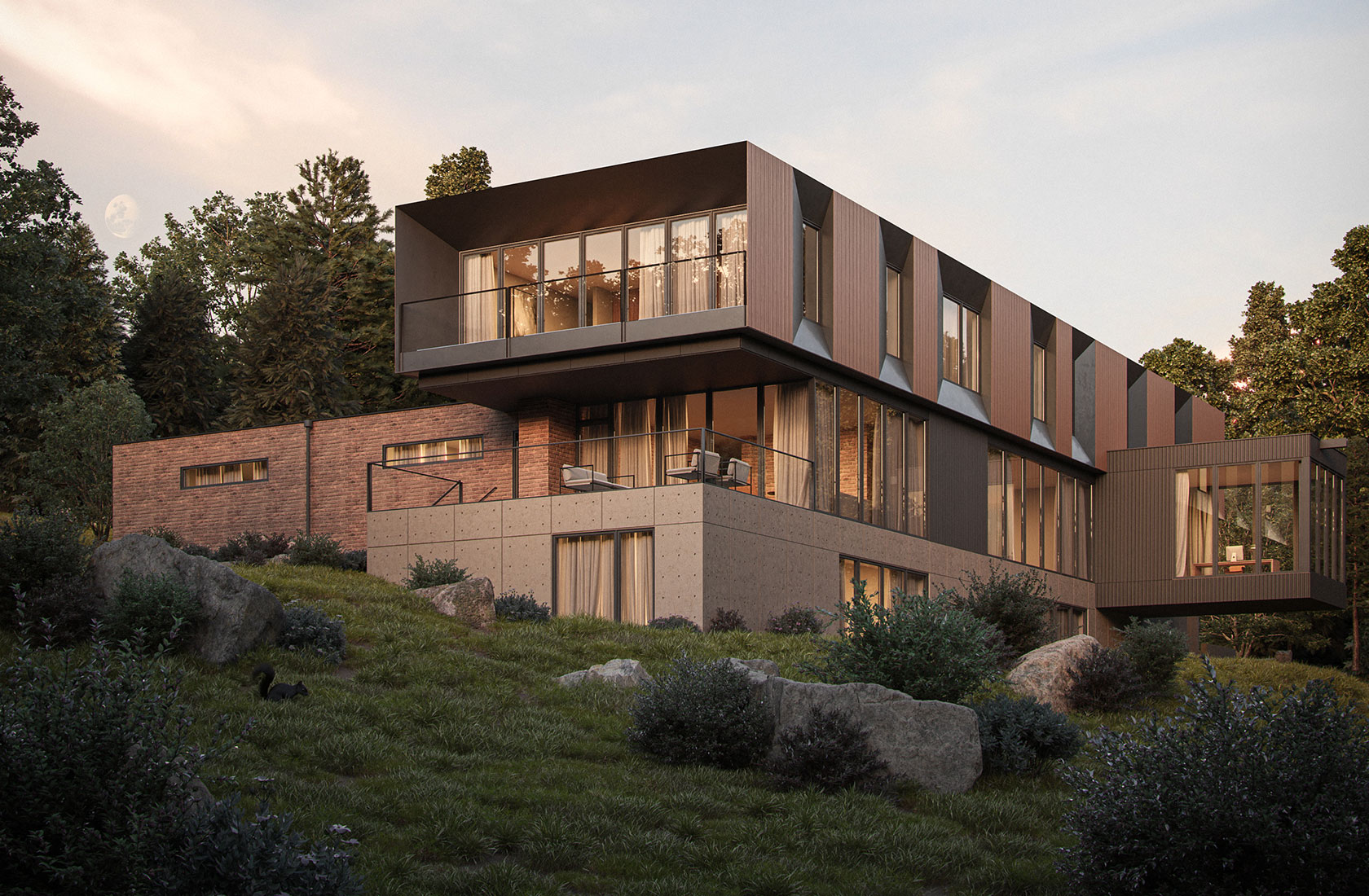
Edmonton is in the middle of a significant transition as a built city. Its mature inner-city neighbourhoods — from Glenora and Windsor Park to Strathcona and Ritchie — are densifying at a pace few anticipated, and the 2023 Zoning Bylaw modernization introduced a framework that has meaningfully expanded what can be built on inner-city lots without a rezoning application. The result is a city where the range of design outcomes is wider than at any point in its history, and where the difference between a considered architectural response and a volume-produced infill box has never been more visible.
Edmonton's 2023 Zoning Bylaw and the RS zone
Edmonton's 2023 Zoning Bylaw consolidation replaced the older RF (Residential-Future) zone framework with a more streamlined set of residential designations. The RS (Small Scale Residential) zone, which applies to most mature neighbourhoods within the Anthony Henday, allows single and semi-detached housing, backyard housing (garden suites), row housing, and small multi-unit buildings on a single parcel, subject to lot size and site coverage limits.
The bylaw has generated genuine debate about pace and design quality. The City's Residential Infill Guidelines provide direction on compatibility with neighbourhood context, but they operate as guidance rather than hard regulation. Design quality in Edmonton's mature neighbourhoods varies enormously — from carefully considered infill that adds genuine value to the street, to large-footprint buildings that maximize every permissible inch without regard for the existing fabric. For homeowners and landowners commissioning custom work, this context matters. A parcel in Glenora, Strathcona, or the River Valley can accommodate a genuinely designed home that will hold its value for decades. It can also accommodate a production infill that will look dated in ten years. The difference is almost entirely a function of who you commission and how seriously they engage with the specific site.
Garden suites and backyard housing
Garden suites have become one of the most financially compelling infill options for inner-city Edmonton property owners. A well-designed garden suite on a deep lot adds rental income, increases assessed property value, and provides flexible accommodation for family members or the owner in later years. Under the RS zone, garden suites are a permitted use on eligible lots, which means no rezoning is required — only a development permit and building permit.
The design considerations for a garden suite are different from those for the primary dwelling. Access from the lane, privacy between buildings, acoustic separation, and natural light for a smaller footprint all require specific design thinking. A garden suite that is merely code-compliant and efficiently laid out is a missed opportunity. The best ones in Edmonton's mature neighbourhoods are small buildings that feel purposefully designed — with the same spatial and material care as the primary home, not as an afterthought appended to the rear of the lot.
The River Valley and estate-scale residential
Edmonton's North Saskatchewan River Valley is one of the largest urban park systems in North America, and the residential communities along its rim — Glenora, Windsor Park, Parkview, Laurier Heights — represent the city's most design-attentive residential address. Building in these communities involves particular sensitivity to views, topography, tree protection, and the River Valley's visual character as something that extends beyond individual lot lines.
Estate-scale custom homes in Edmonton's River Valley communities require genuine design investment. These are not projects where a standard builder plan can be adapted to fit the site. They require an architect who understands how to site a building for views, natural light, and privacy simultaneously — and who brings the same material seriousness that the settings demand. We think about these projects the way we think about all our residential work: the building should feel like it belongs exactly where it is, as though it could not have been designed for any other lot.
Edmonton's mature neighbourhoods have lost population for fifty years. Good infill does not just add density — it returns life to streets that have been thinning out since 1971.
What to look for in an Edmonton architect
Edmonton's architectural culture has matured significantly over the past decade. There is now a meaningful group of practices producing genuinely designed residential work in the inner city, and the standard for what counts as good infill has risen correspondingly. When evaluating architects for an Edmonton project, portfolio of actual built work in comparable neighbourhoods is the most reliable guide. Ask specifically about the development permit process on recent inner-city projects, and about how the practice approaches the tension between maximizing development value and maintaining design quality. The two are not mutually exclusive — the best infill in Strathcona and Garneau demonstrates this clearly — but they require a practice that genuinely values both.
We are a Calgary-based firm with direct design experience in Edmonton and a genuine interest in the city's inner-city fabric. Our approach there is the same as it is in Calgary: learn the street, learn the site, and design something that adds to both.