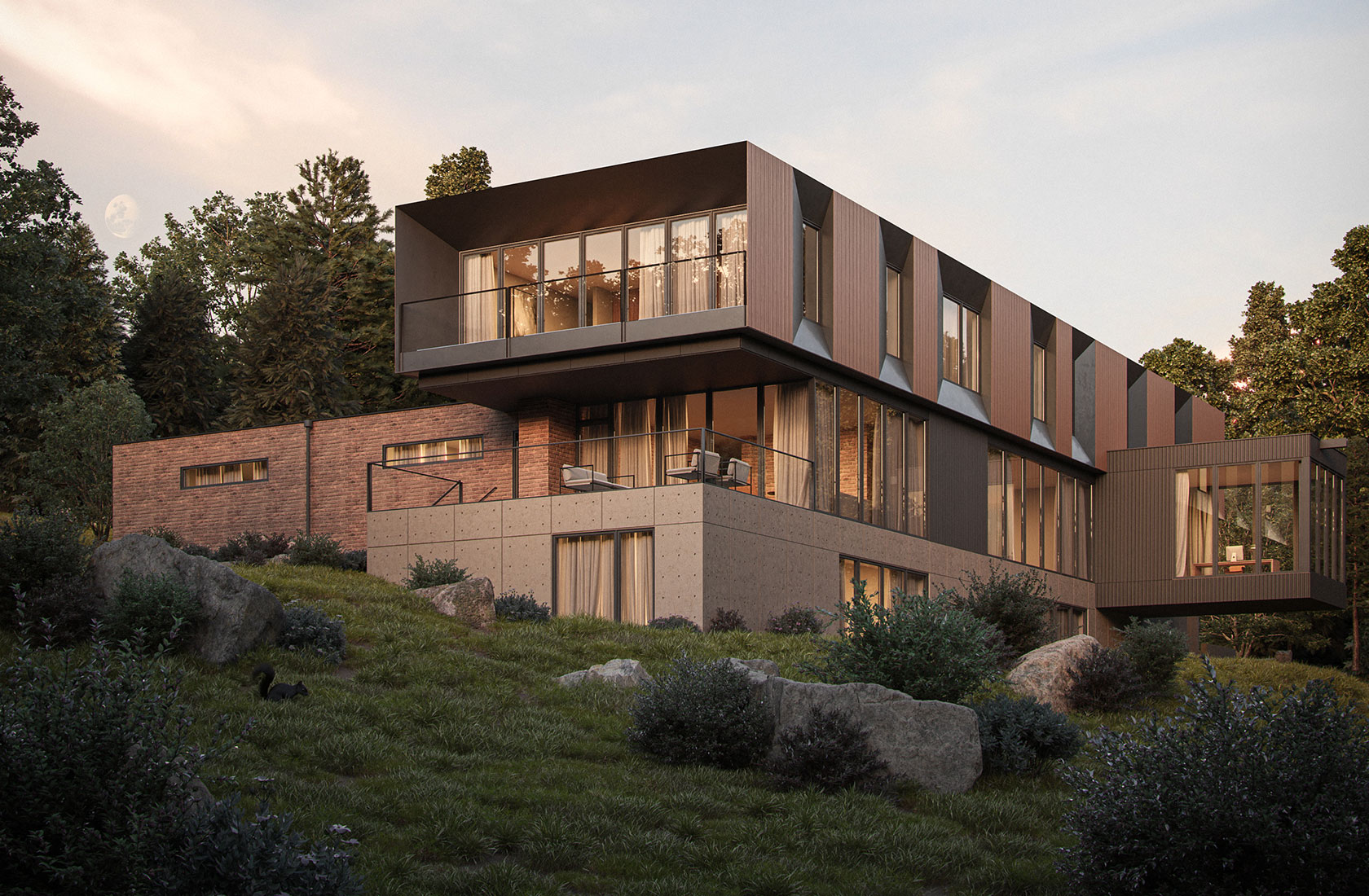
Vancouver Island is not a single building environment. Victoria and its surrounding municipalities present one set of challenges: a well-established urban fabric, a layered permit process, genuine heritage considerations, and a civic culture that takes design seriously. The Island's west coast — Tofino, Ucluelet, and the communities along the Pacific Rim — presents something almost entirely different: extreme weather exposure, remote sites, a tight and seasonal building trade market, and a natural setting so compelling that architecture either rises to meet it or looks inadequate in comparison. This post covers what you need to understand about both.
Greater Victoria: the permit landscape
The City of Victoria and the municipalities of Greater Victoria each maintain their own development permit and building permit processes. For unincorporated areas outside municipal boundaries, the Capital Regional District (CRD) operates as the permitting authority and targets a four-week review timeline for complete building permit applications — faster than Vancouver, but that timeline assumes a well-prepared submission.
Victoria introduced Amenity Cost Charges in October 2025, applying to new development that increases demand for community amenities. The City also requires compliance with Emissions Level 4 of the Zero Carbon Step Code for all new multi-unit residential buildings of six storeys or less, which means energy modelling from a certified advisor is required at permit submission. These are not unusual requirements in the current BC regulatory environment. They are worth budgeting for from the start.
Heritage in Victoria
Victoria has one of the most intact concentrations of pre-First World War residential architecture in Western Canada. Neighbourhoods like Fairfield, James Bay, and Fernwood contain streets of Edwardian and Craftsman homes that are collectively significant as well as individually considered for heritage listing. The city's heritage program operates similarly to Vancouver's — designated properties carry Heritage Alteration Permit requirements, and character overlay guidelines apply to unlisted pre-1940 buildings.
The practical implications for renovation projects in Victoria's established neighbourhoods are comparable to Vancouver: exterior street-facing elements are protected on character properties, Heritage Alteration Permit timelines add eight to sixteen weeks to complex projects, and heritage consultant documentation is required for designated buildings. Victoria's overall permit volumes are lower than Vancouver's, which generally means more predictable review timelines and more accessible City staff during pre-application consultation. That accessibility matters — the pre-application stage is often where the most useful clarifications happen.
The west coast: building for the Pacific edge
Tofino, Ucluelet, and the Pacific Rim communities represent a distinct architectural condition that has very little in common with Greater Victoria. Annual precipitation in Tofino exceeds 3,200mm. Wind loading during winter storms has genuine structural implications. Salt air, sustained humidity, and UV exposure from the extreme angle changes between overcast winter light and summer intensity combine to create a building environment that punishes inadequate material choices quickly and visibly.
Building on Vancouver Island's west coast requires a seriousness about envelope performance, cladding durability, and moisture management that goes beyond what the BC Building Code strictly requires. Cedar and Douglas fir weather predictably in the coastal climate and are the natural material language of the region's best architecture. Metal roofing performs better than asphalt in sustained rain exposure. Composite cladding systems that manage the rain screen cavity effectively are more reliable than those that do not, regardless of their appearance at handover.
We think about durability and patina as design values, not just technical requirements. The buildings we most admire are the ones that look better at twenty years than they did at two — where material choices were made for the long term, not for the photograph at completion. The west coast is a context that rewards exactly that approach, and punishes the alternative.
The west coast of Vancouver Island is one of the most compelling settings for architecture in Canada. Buildings here either engage their environment honestly or they look like they were designed somewhere else and delivered by barge.
Trade availability and project logistics
Vancouver Island's building trade market is tighter than mainland BC, particularly in smaller communities. Tofino and Ucluelet have a very limited local trade base, which means most skilled labour travels from Victoria, Nanaimo, or the mainland. This has direct cost and scheduling implications. A construction schedule that does not account for the logistical overhead of working with travelling trades — accommodation, travel time, and the inability to quickly return for minor corrections — will consistently run over time and budget.
The most effective way to manage this is to invest in complete, well-coordinated design documentation before construction begins. A set of drawings that leaves nothing unresolved will require far fewer site visits and RFI responses than a set that delegates decisions to the site. On a remote west coast project, every unresolved design question is a delay measured in days or weeks rather than hours. This is not a reason to avoid these sites. It is a reason to take the documentation phase seriously.
We currently have a project underway on Vancouver Island. That direct experience with Island logistics, trade relationships, and permit processes informs how we approach new commissions across the region.