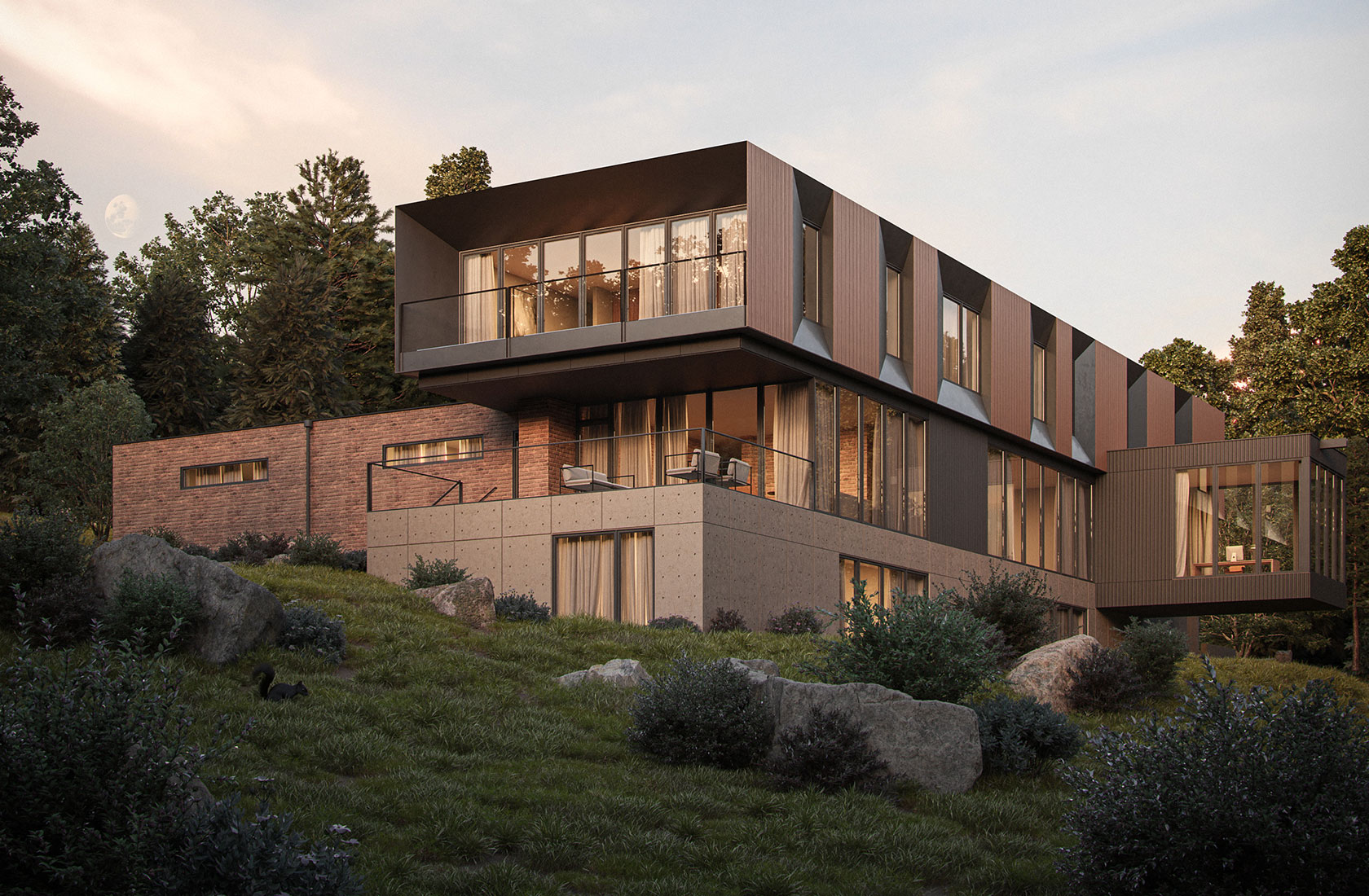
Calgary's inner-city neighbourhoods have been densifying steadily for over two decades, and the pace is accelerating as land values in established areas keep rising. The zoning landscape is also in active transition right now, which means anyone planning an inner-city project needs to understand where things stand and what is about to change. This is a plain-language guide to what you actually need to know before starting.
What inner-city infill actually means in Calgary
In Calgary's context, infill typically means new residential construction on a previously developed lot within an established neighbourhood — usually involving demolition of an existing dwelling. The most common typologies are single-family replacement homes, semi-detached pairs, and homes with secondary suites or laneway suites above rear garages. The city has actively encouraged infill as part of its Municipal Development Plan, targeting a significant share of new housing growth within existing developed areas rather than greenfield suburbs.
The zoning transition you need to know about
Calgary's inner-city zoning is in active flux. In August 2024, City Council approved blanket rezoning that changed the base residential designation across most established neighbourhoods from the old R-C1 and R-C2 districts to R-CG (Residential Grade-Oriented). R-CG allows semi-detached homes, rowhouses, and townhouses of up to four units on a single parcel without requiring a separate land use redesignation.
On April 8, 2026, Council voted 12-3 to repeal blanket rezoning following eight days of public hearings. The repeal takes effect August 4, 2026. Until that date, R-CG remains in effect and development permits submitted under R-CG before the repeal retain those entitlements. Properties then revert to their pre-August 2024 zoning — primarily R-C1 and R-C2 — at which point rowhouses and townhouses will again require a land use redesignation before a development permit can be issued.
In plain terms: if you are considering a rowhouse or multi-unit infill project, the window to submit under current R-CG rules closes August 4, 2026. Single-family and semi-detached projects remain straightforwardly approvable after that date under both zoning frameworks.
The development permit process
Most new infill homes in established Calgary communities require a development permit before a building permit. Review times for straightforward residential infill have ranged from six to sixteen weeks in recent years, depending on application volumes and whether the proposal requires a variance. Projects that do not comply with all contextual rules — even in minor ways — trigger a variance process that adds public notice requirements and additional review time.
A well-prepared application, with a design that has been checked against the applicable Land Use Bylaw before submission, is the most reliable way to keep the process moving. Incomplete applications and designs that have not been properly zoning-checked are the most common source of delays. We prepare permit packages as a standard part of project delivery and coordinate directly with the City on anything that needs resolution.
Design considerations specific to Calgary infill
Calgary's contextual zoning framework means that architectural decisions have direct regulatory implications. The height of adjacent homes affects the maximum allowable height of the new building. The predominant front setback on the block affects how far forward the new house can sit. The existing streetscape shapes what the City will find acceptable at development permit review.
This regulatory sensitivity to context is actually a useful design discipline, not just a constraint. The best infill homes in Calgary are not houses that ignore their neighbourhood. They are houses that understand their neighbourhood clearly enough to contribute something new without disrupting what already works. We have designed projects in Ramsay, Mount Pleasant, Parkdale, North Glenmore, Scarboro, and Bowness — and each one has been a specific response to its particular street and block. That specificity does not come from a formula. It comes from looking carefully at what is actually there.
Secondary suites and laneway housing
Calgary's rules around secondary suites and laneway suites have evolved considerably. A legal secondary suite within the main dwelling is permitted in most inner-city zones, subject to ceiling heights, egress windows, and separate utility metering requirements. A laneway suite above a rear garage is permitted in many zones and adds rental income potential that often justifies the additional construction cost.
The Brick House project in our portfolio was specifically designed around the inclusion of a laneway suite, with the primary home's massing and material palette extended to the rear so the whole assemblage reads as a single coherent proposition rather than an afterthought. That integration matters — both architecturally and in how the City receives the application.
The most expensive infill mistakes happen before design starts — buying a lot without understanding what it allows, or underestimating how significantly a sloped site or heritage adjacency changes the project.
What to look for in an architect for a Calgary infill project
Specific experience with Calgary's Land Use Bylaw and development permit process matters more for infill than for almost any other project type. An architect who has navigated contextual zoning, worked with the City's Urban Design team on variance applications, and produced construction documents for Calgary's specific trade environment will save time and reduce surprises in ways that are hard to predict from a fee comparison. Portfolio is the best guide. Look for built infill projects in comparable neighbourhoods, and ask specifically about projects where the design encountered regulatory complexity. How a practice handles the difficult cases is more revealing than how it handles the easy ones.