The word "custom" is used so broadly in residential construction that it has nearly lost its meaning. Builders use it to describe homes where you can choose your countertop colour. Developers use it to describe subdivisions where lot purchasers select from a pre-set menu of floor plans. True custom design, where a home is conceived from the ground up for a specific client, site, and brief, is a different thing entirely. This post explains what separates a genuinely custom home from a spec or semi-custom home, what you gain from each approach, and how to know which is right for your situation.
What a spec home is
A spec home, short for speculative home, is a home built by a developer or builder for eventual sale on the open market. The builder finances and designs the project, makes all decisions about layout, materials, and specification, and sells the completed or near-completed home to a buyer. The buyer is purchasing a finished product, not participating in the design of one.
Semi-custom homes occupy a middle position. A builder purchases land, develops a base floor plan, and sells lots with attached construction contracts to individual buyers. Buyers can make selections within a defined range, typically finishes, fixtures, and sometimes minor plan modifications, but the fundamental architecture is fixed. The builder's construction process runs efficiently because the core design repeats across multiple lots with limited variation.
Both models serve a legitimate market. For buyers who want a new home within a defined budget and timeline, without the complexity of managing a design process, spec and semi-custom homes offer real advantages. The outcome is predictable, the process is familiar to the builder, and the buyer's time investment is modest.
What a custom home actually is
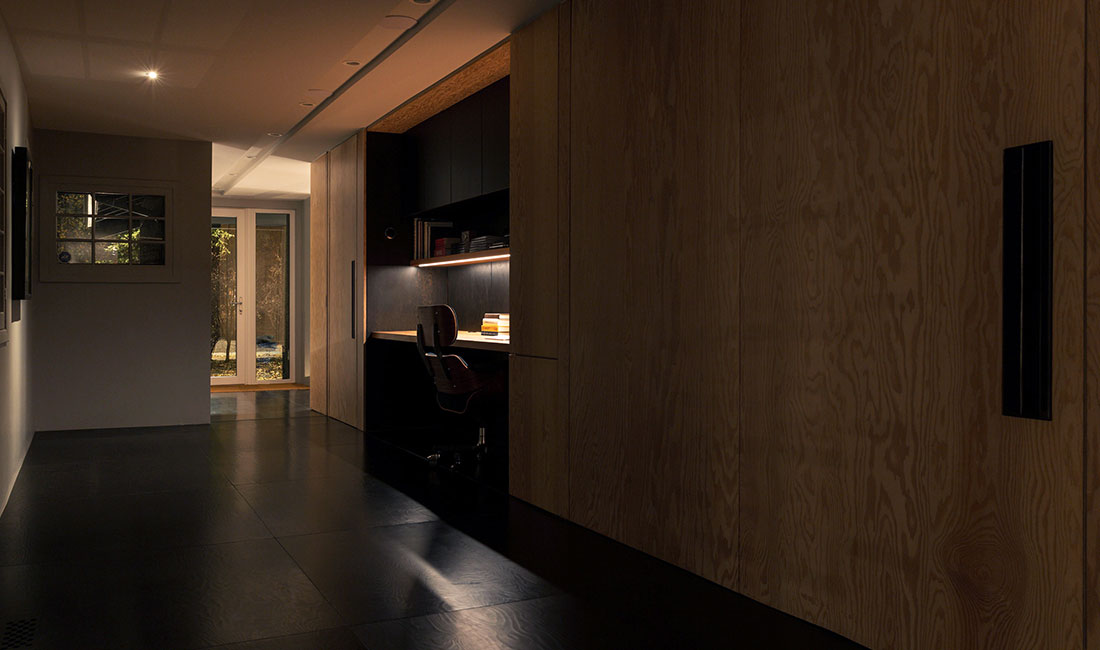
A genuinely custom home begins with no predetermined design. An architect works with a specific client to understand how they want to live in a building, what the site demands and offers, what constraints the zoning imposes, and what the budget allows. From that understanding, a design is developed that could not have been produced for anyone else on any other site.
This process takes longer than selecting from a plan library, costs more in design fees, and requires the client to make more decisions and engage more actively with the outcome. What it produces is a building that fits the site, the family, and the way they actually live in a way that a plan-library home cannot replicate.
The distinguishing characteristics of a genuinely custom home are: the design was developed specifically for this client and this site, the architect was engaged before the design was determined, the client was part of the design conversation from the beginning, and the outcome cannot be reproduced on a different lot without modification.
The cost difference
Custom homes cost more than spec homes. This is partly due to architectural fees, which on a full-service custom home typically run 10 to 16 percent of construction cost. But the more significant cost difference is in the construction itself. Custom homes are not built to a production model. Materials are selected for the specific project, structural solutions are designed for the site, and the level of detail and finish is typically higher than production construction allows.
A production builder builds the same home many times and optimises the process around that repetition. Their efficiency comes from volume and standardisation. A custom home builder works with a unique set of drawings on every project, coordinates a different set of specifications each time, and prices work that has no direct precedent in their previous projects. That process costs more, and the pricing reflects it.
In Calgary, mid-range custom home construction in 2026 runs from approximately $450 to $700 per square foot for hard construction costs, depending on specification level, site conditions, and builder. In Vancouver, comparable construction runs from $550 to $900 per square foot. These ranges are meaningfully higher than production construction, and they reflect the real cost of building something specific and well-made rather than something efficient and standard.
The timeline difference
A spec home has a defined timeline because the design is already complete. A buyer who purchases a home under construction can move in when construction finishes, typically six to twelve months after the builder breaks ground. A buyer who purchases a lot in a semi-custom development and begins the selection process from the plan library can expect a similar timeline from contract to occupancy.
A genuinely custom home adds the design phase before construction begins. From first meeting with an architect to occupancy, the typical range in Western Canada is fourteen to twenty-four months, depending on the city's permit timeline and the project's complexity. For a client who needs to move within a specific window, this timeline matters and should be factored into the decision.
What you are actually buying
The choice between a custom and spec home is ultimately a question of what you are optimising for. A spec or semi-custom home optimises for speed, cost predictability, and process simplicity. You know what you are getting, approximately when you will get it, and approximately what it will cost. The outcome may not be exactly what you would have designed for yourself, but it is a competent, liveable home within a known budget.
A custom home optimises for fit. The building will be designed around how you actually live, the site it sits on, and the specific brief you bring to the architect. The process is longer, more involved, and less predictable in its details. The outcome, when the process is handled well, is a building that performs better for its occupants and holds its character more durably over time than a production home of equivalent cost.
Custom does not mean expensive for its own sake. It means designed for you, on your site, with your life as the brief. The cost follows from the specificity, not the other way around.
When custom makes sense
A custom home makes the most sense when you have a specific site with constraints or opportunities that a standard plan cannot address, when you have a clear sense of how you want to live and existing homes do not provide it, when you are planning to occupy the home for long enough that the design investment compounds over time, or when the location you are building in carries land values high enough that the quality of the building matters to the total investment. Inner-city infill lots in Calgary or Vancouver, sloped sites in the Okanagan or on the North Shore, or properties with significant views or heritage adjacency all tend to reward a custom design approach that a standard plan cannot deliver.