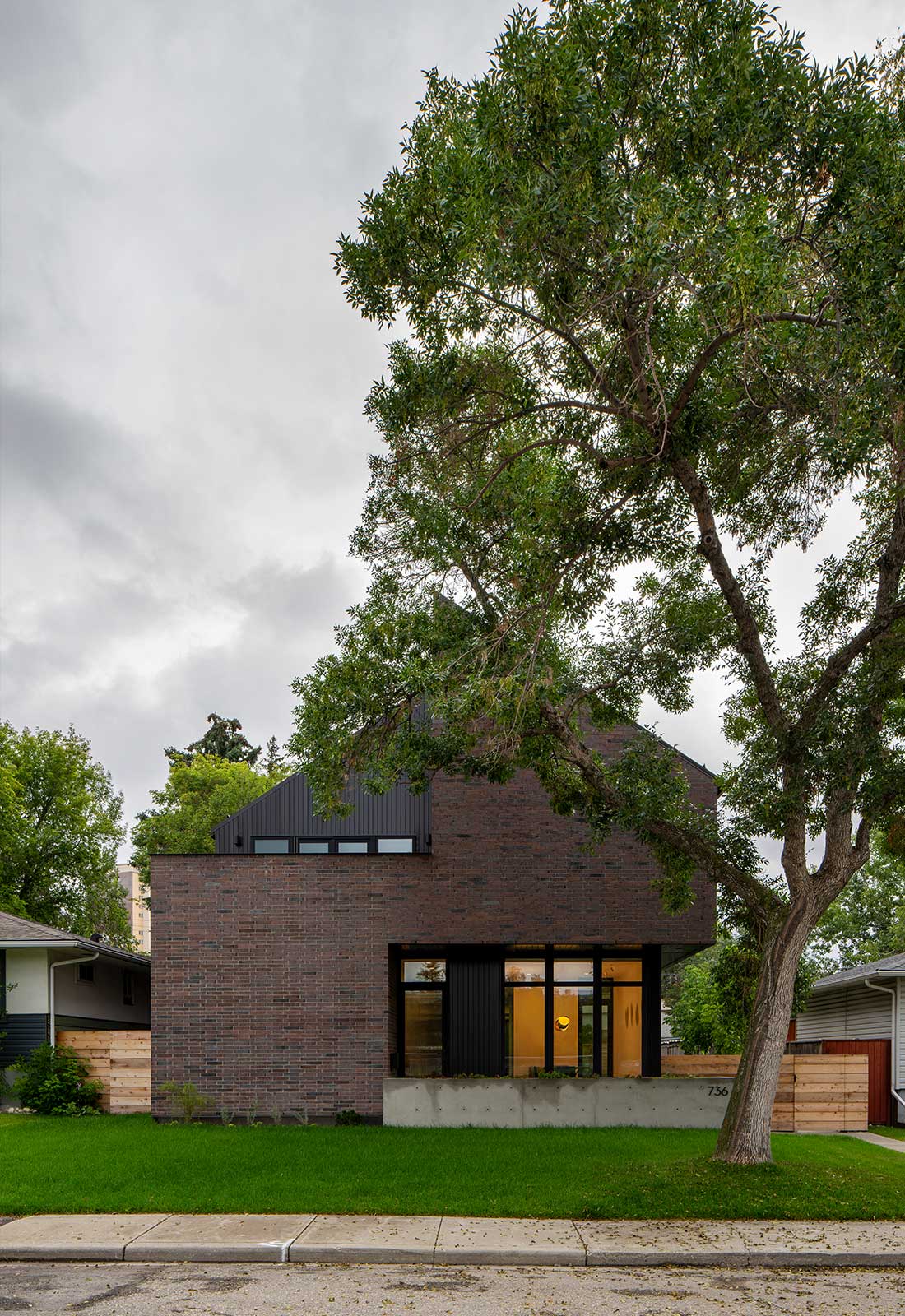
Most people choose an architect the same way they choose a restaurant: they look at pictures, read a few reviews, and go with the one that appeals most. The portfolio is a reasonable starting point, but it tells you almost nothing about whether a particular architect is the right fit for your project, your budget, or the way you want to work. This post is about the questions that matter more than the images.
Start with registration
Before anything else, confirm that the architect you are considering is registered with the relevant provincial association. In Alberta, that is the Alberta Association of Architects (AAA). In British Columbia, it is the Architectural Institute of British Columbia (AIBC). Registration is not optional, and it is not a formality. A registered architect has completed accredited professional education, worked under supervision for a defined period, passed comprehensive examinations, and committed to a code of conduct and ongoing professional development. They carry professional liability insurance and can be held accountable through a formal complaints process.
Designers, drafters, and building designers can produce drawings, and in some limited circumstances those drawings can be permitted. But for any project requiring a signed and sealed set of drawings, only a registered architect can provide them. Confirming registration before you invest time in a relationship is simply due diligence.
Principal-led versus production practice
Architecture firms range in size from sole practitioners to large studios with dozens of staff. Size is not a quality indicator in either direction. What matters more for most residential and small commercial clients is whether the principal of the firm, the registered architect whose name and stamp appear on the drawings, is actually doing the work on your project.
In a large production firm, a principal may sign the drawings but a junior staff member or project architect may be the person you interact with day to day, design the project in detail, and make the majority of decisions. This is not inherently wrong, but it is different from what clients often assume when they hire a named architect. In a principal-led practice, the architect you meet at the first interview is the architect who designs your home, attends your meetings, and visits the site during construction.
The question to ask directly is: who will be responsible for my project day to day? Who will I call when I have a question? Who will be at my site visits? The answer should be specific and honest. If it is vague or conditional, treat that as information.
Reading a portfolio critically
A portfolio shows you what an architect has built, but not why it looks the way it does, how it performs for its occupants, or what the process of building it was like. A few things worth looking for when reviewing work:
- Range of scale and complexity: Has the firm worked on projects comparable in scale and type to yours? A studio with an outstanding portfolio of large civic projects may not be the best fit for a tight inner-city infill where budget management and permit navigation are as important as formal invention.
- Material and detail quality: Construction photography can be lit and cropped to hide a great deal. Look for images that show junctions, thresholds, and material transitions up close. The quality of detail in those moments tells you more about the practice's rigour than a wide-angle exterior shot.
- Consistency over time: A body of work that holds a consistent level of quality and intention across different projects, clients, and budgets is more reassuring than a single exceptional project surrounded by mediocre work.
- Projects built, not just designed: Some portfolios are heavy on competition entries, unbuilt studies, and conceptual work. For a client commissioning a building, what matters most is experience with the full cycle: design, permit, construction, and occupancy.
Questions to ask at your first meeting
The first meeting with an architect is not just for them to hear about your project. It is for you to evaluate whether this is the right person to spend the next one to two years working closely with. Questions worth asking:
- How many projects are currently active in your office, and how much of your personal time is each getting?
- What does your design process look like from first meeting to construction documents, and how do you involve clients at each stage?
- Can you describe a project where something went wrong during construction, and how you resolved it?
- Do you include construction administration in your standard service, and what does it look like in practice?
- What is your experience with the permit process in the municipality where my project is located?
- Can I speak with a previous client whose project was similar to mine?
The answers themselves matter less than how the architect responds to the questions. Directness, specificity, and willingness to discuss difficulty honestly are better indicators of a good working relationship than polished answers that avoid uncertainty.
How fees relate to service level
Architectural fees vary, and the lowest fee is not the best value. A lower fee often reflects a narrower scope of services: fewer design iterations, limited construction administration, or less time devoted to detail coordination. The gap between a well-coordinated set of construction documents and a permit-minimum set of drawings shows up in the building, usually in the form of site instructions, contractor substitutions, and post-completion modifications.
When comparing proposals, look at scope as carefully as fee. A proposal that includes full construction administration, interior design coordination, and regular site visits is a different service than one that delivers a permit set and steps back. The right comparison is cost per unit of service, not total fee in isolation. For a detailed guide to how architectural fees are structured in Alberta and BC, see our guide to architect costs in Calgary and architect costs in Vancouver.
You are not just hiring someone to draw your house. You are hiring someone to make hundreds of decisions on your behalf over the next two years. The quality of those decisions depends on their judgment, not their drafting software.
Red flags
A few things worth treating as caution signals in an architect selection process: a firm that cannot name the person who will be your day-to-day contact, a portfolio that shows no projects built in the last three years, a fee proposal that excludes construction administration without explanation, an architect who is reluctant to provide client references, and any proposal that promises a design outcome before the architect has spent meaningful time understanding your brief and your site. Good architecture is the product of a thorough process. Anyone who can tell you what your house will look like before that process has started is not offering you a design process. They are offering you a product.